
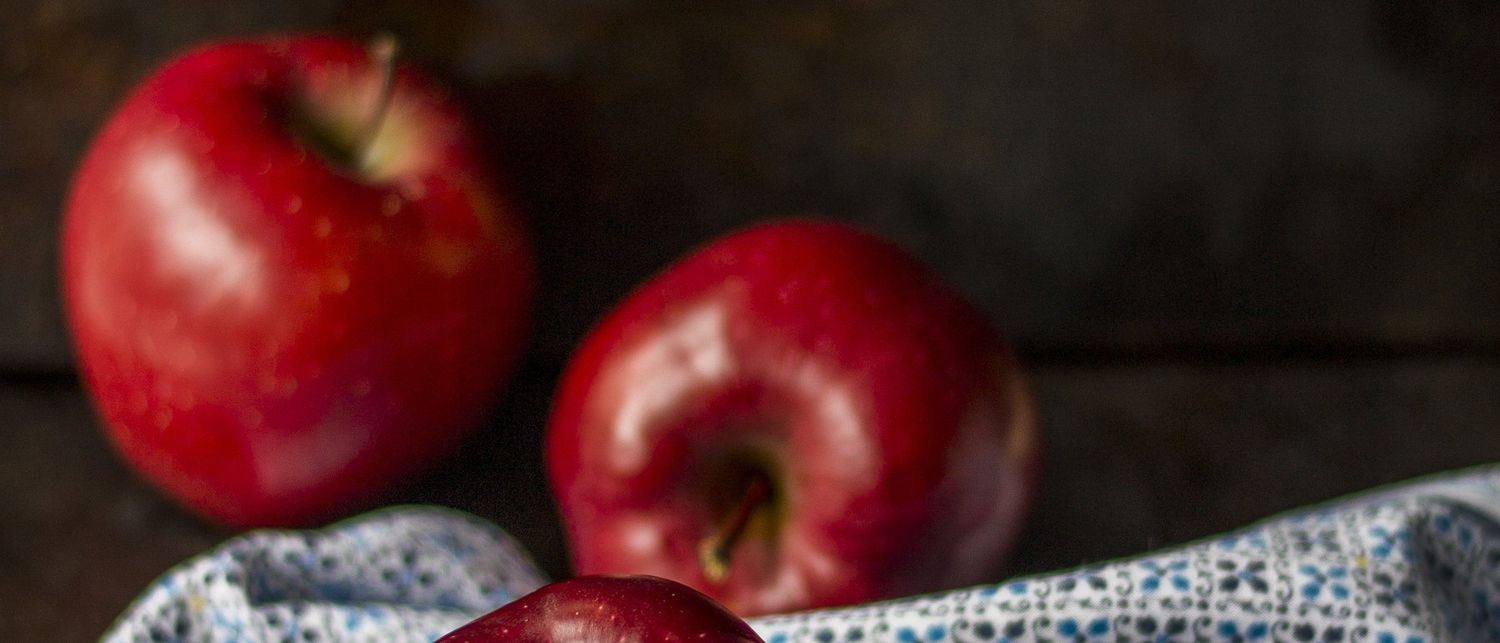
Japanese Apple
りんごAomori fruit, sold as a luxury gift item across Asia. Admissible to the United States, but under the heaviest treatment regime of anything we carry.
Specification, not suggestion.
Everything on this page is either a published figure with a source or a gap we have written down. Nothing is a guess dressed as a fact.
Readiness: 4 of 6. We answer six questions about every line before we sell it: supply, cost, price, regulatory, buyers, margin. This one has 4 of them answered.
| Detail | What we state |
|---|---|
| Origin | Aomori, over half of Japan's crop |
| Varieties | Fuji and others. All Malus domestica admissible since 2010 |
| Treatment | Cold treatment AND fumigation, APHIS supervised, in Japan |
| Inspection | By an APHIS inspector and Japan's NPPO, before export |
| Where it sells | Taiwan 77 percent of export value, Hong Kong 18 percent |
| Customs heading | 0808.10, to be confirmed by your broker |
What we know, and what we do not.
Most suppliers answer the first three and let you discover the other three after you have ordered. All six are here, including the ones where the honest answer is that nobody has looked yet.
| Question | Answer |
|---|---|
| Supply | Aomori produces more than half of Japan's apples. About 70 percent is sold domestically and the rest exported, roughly 34 million kg a year, which puts Japan ninth in the world for fresh apple exports. |
| Cost | Japanese wholesale was 2.89 USD per kg in March 2026. |
| Price | The 2024 average export price was 3,900 USD per tonne, which is 3.90 a kilo and reflects the fruit being sold as a luxury gift rather than as produce. |
| Regulatory | THE PROBLEM, and it is a large one. Japanese apples may enter the United States only if cold treated AND fumigated under the supervision of an APHIS inspector, for peach fruit moth, yellow peach moth and fruit tree spider mite. The fruit must be inspected in Japan before export by both an APHIS inspector and Japan's plant protection organisation, and Japan's NPPO must hold a trust fund agreement with APHIS before APHIS will supply those inspectors. All varieties of Malus domestica have been admissible since 2010, not only Fuji. |
| Buyers | Not answered for the United States. Taiwan takes 77 percent of Japan's apple export VALUE and Hong Kong 18 percent, which tells you where this product already works and how little of it goes to America. |
| Margin | Not computed. The treatment regime is a cost line nobody has priced, and until somebody does, a margin on this line is a guess. |
The things that turn a good price into a bad one.
The trust fund agreement
APHIS will not supply inspectors in Japan without it. This is a government to government arrangement, not something a shipper arranges.
The treatment cost
Cold treatment plus fumigation plus supervised inspection is a real cost per kilo and nobody has priced it.
Where the demand is
If the US route proves uneconomic, Taiwan and Hong Kong already buy this fruit at a premium.
What we would need to quote this properly.
- What the treatment actually costs per kg
- Whether the trust fund agreement is current
- Whether a US buyer exists at all
Sources
- APHIS regulations on apples from Japan, varietal restrictions removed 2010
- Japan apple export statistics, June 2026
- Japanese wholesale price data
What leaves Japan this month.
Once a month: the prices that moved, the reason they moved, and what we can allocate before it is spoken for. Written for people who buy, by the people doing the buying.
Buyers and distributors only. We do not sell the list and you can leave in one click.