
What leaves Japan
this month.
Two things. Scallop is at a record after a second bad catch, so a fixed annual price is now the wrong contract. And the same box pays twelve and a half points more duty landing in New York than in Rotterdam.
What moved
Issue 001 · Oct 2026Three published prices for the same product, from three different places in the chain. Hold any scallop offer you receive against them: one is what Japan charges America, one is what Japan charges everybody, and one is what it costs inside Tokyo that morning. An offer that sits oddly against all three is an offer worth a question.
What's in season.
| Line | From us | In season | Why |
|---|---|---|---|
| Japanese Wagyu | Open now | In | Cattle are not seasonal. The United States tariff quota is, and the month you ship decides the duty.Go deeperJapan has no beef quota of its own. Its 200 tonnes were folded into a shared 65,005 tonne quota in 2020, where it competes first come first served with Brazil. That quota was triggered after 17 days in 2025 and exceeded on 6 January 2026, roughly 99 percent of it filled by Brazilian shipments. So the in quota rate of 4 percent belongs to the first week of January and the real rate is 26.4 percent. We price at 26.4 and tell you so, because a quote built on the lower number is a quote that changes after you accept it. The whole Japanese Wagyu page |
| Japanese Kobe Beef | Ask us | Ask us | Not a season and not a supply problem. The association that owns the name chooses who may sell it, and we are not on that list yet.Go deeperBetween 3,000 and 5,500 head are certified in a year and under a tenth leaves Japan. Every shipment the Kobe Beef Marketing and Distribution Promotion Association publishes names S FOODS Inc as the exporter, and the consignments run from 7 to 145 kilograms, which tells you the shape of this trade: small, controlled and documented. Fewer than fifty restaurants and distributors in the United States may call it Kobe. Every real cut carries a ten digit carcass number you can check against the register, and anything offered without one is not Kobe whatever the invoice says. We would rather tell you that than sell you something we cannot evidence. Roy decided on 13 October 2026 that we apply for distributor approval, so this line is a question with a letter behind it rather than an idea. The whole Japanese Kobe Beef page |
| Japanese Wasabi | Ask us | In, and tightening | Best from the cool months, and the national crop is small enough that this is never a volume line.Go deeperJapan ships about 355 tonnes of water grown rhizome a year, for the whole country: Shizuoka 172.8, Nagano 157.2, and everywhere else under 21 between them. Summer carries disease loss in the beds and somebody pays for it, so we would rather have that conversation in April than surprise you in July. Watch the statistic too. The all wasabi series counts field grown and leaf and stem and runs to 2,017 tonnes, which is nearly six times larger and is not the product you are buying. The whole Japanese Wasabi page |
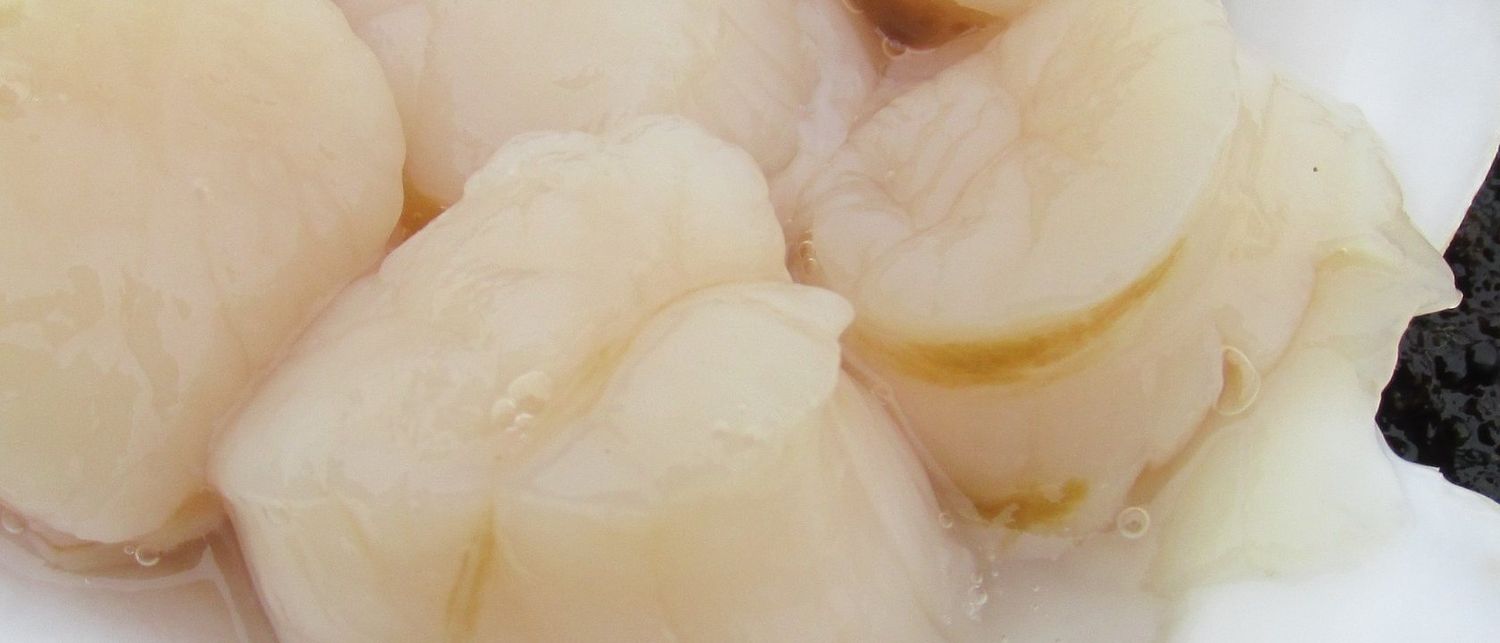
| Japanese Scallop | Ask us | In | Graded and packed year round. The price, not the availability, is what moves, and this month it moved.Go deeperHokkaido landed 303,200 tonnes to the end of November 2024, down 4 percent and the sixth consecutive year above 300,000. The United States is now Japan's largest market for frozen adductor and paid 7,657 yen a kilogram in the first half of 2026, up 29 percent. One thing to carry into any offer you receive: the customs duty on frozen adductor is Free, and the Section 301 forced labour action of 24 July 2026 lifts anything below 12.5 percent up to it, so a Japanese scallop lands at 12.5. The same box lands cheaper in Rotterdam, where the Japan to EU agreement puts it at zero. That rate has changed three times this year, so check it before every offer rather than every quarter. The whole Japanese Scallop page |
| Japanese Matcha | Ask us | On allocation | Not a season problem. The best makers have moved to allocation only, so the question is whether one will open an account at all.Go deeperThe Kyoto first harvest auction reached 8,235 yen a kilogram in May 2025, up 170 percent in a year, against a previous record of 4,862 in 2016. National tencha production is 5,336 tonnes and it takes a hundred kilograms of leaf to make twenty of tencha. Two of the most credible Uji names in America have closed their wholesale books rather than raise prices again. This is why we talk about access before we talk about price, and why the answer comes from a conversation in Kyoto rather than from an email. The whole Japanese Matcha page |
| Japanese Hamachi | Ask us | In | Farmed, so year round, with a winter peak for the wild fish.Go deeperJapan grows about 100,000 tonnes of buri a year, with Kagoshima first at 46,217 tonnes, then Ehime and Oita. The cut is the thing that differs by market: American buyers take a larger fillet than Japanese or European ones, so tell us the destination before the specification. The customs duty on the fillet is Free and the Section 301 action takes it to 12.5 percent. A US importer is already running this exact lane from Kagoshima year round, which is the useful part: the tariff is a cost on this line, not a barrier. The whole Japanese Hamachi page |
| Japanese Apple | Ask us | Coming in | Aomori picks from late autumn, and the American route is booked before it is picked.Go deeperAomori grows 374,400 tonnes, which is 62 percent of Japan's crop, and about half of it is Fuji. The American route is the hard part and we will not pretend otherwise: it needs cold treatment and fumigation carried out in Japan under the supervision of a United States inspector, which in turn needs an agreement between the two governments to be in place. Japan sold 108 million dollars of apples in 2024 and effectively none of it to the United States. If you are buying for Europe or Asia this is a straightforward line. If you are buying for America, ask us the hard question first. The whole Japanese Apple page |
| Japanese Sake | Ask us | Not yet | Nothing moves until the American licensing does, and we will not quote it before that is real.Go deeperA federal importer basic permit, then label approval for every single label, then a route through a three tier system that is decided state by state. One detail decides the economics before any of that: sake is taxed as wine at 1.07 dollars a wine gallon, unless brewer's alcohol has been added, in which case it is taxed as a distilled spirit at 13.50 a proof gallon. More than twelve times, decided by one line on a brewing sheet. We ask the brewery before we talk about price. Japan exported 43.5 billion yen of sake in 2024 and the United States took 11.4 billion of it, up 26 percent, so the market is there. The licence is not, yet. The whole Japanese Sake page |
Every newsletter made
with you in mind.
A closer look at Marco Polo, from the products we're bringing in to the seasons that shape them. Each issue shares what's new, what's worth discovering, and what's coming into or out of season across Japan.
Along the way, we share stories from our journey, introduce new additions to our collection, and offer subscribers occasional access to something special.
Why almost nobody
can ship you wasabi.
Japan grows 355 tonnes of water grown rhizome in a year. For the whole country. We publish the split by prefecture, what a named valley costs against the market, and why the July price is not the January one.
Plus the first allocations we can hold for subscribers before they are offered anywhere else.
Read it here.
Or have it first.
This page is the public record and it stays up. The letter goes out the morning it is written, and what we can hold is offered to that list before it is offered here.
- The prices that moved, and the reason, with the source on every figure so you can check it against your own offers.
- What is opening and closing, across all eight lines, including the months we tell you not to buy.
- First refusal on allocation, when a producer gives us a quantity we can hold, which is the part that does not reach this page.
Buyers and distributors only. One letter a month, nothing else, and you can leave in one click. Issue 002 · November is next.